Agricultural Team Intensive AUN-QA Training Connect Constructive Alignment to elevate curriculum quality in the same direction
Faculty of Agricultural Technology, KMITL, organized two consecutive workshops for academic personnel to enhance understanding of quality assurance, learning outcome design, and systematic teaching and learning management.
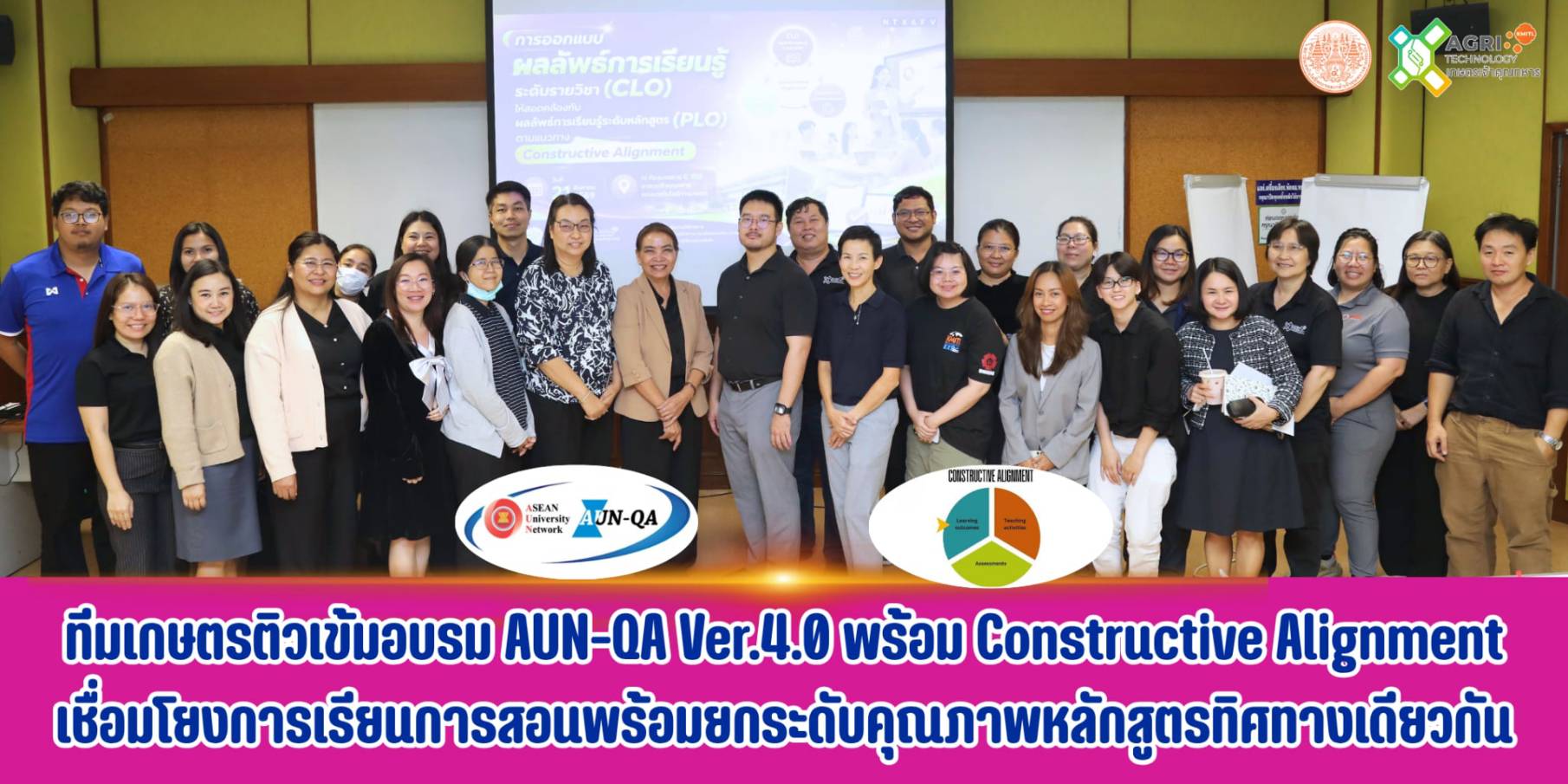
Two essential courses to elevate the quality of education
AUN-QA Version 4.0 towards Systematic SAR Writing
Enhance the understanding of the core concepts of AUN-QA Version 4.0, self-assessment guidelines, evidence analysis, and the writing of the Self-Assessment Report (SAR) to be clear, systematic, and aligned with the criteria.
Designing Course Learning Outcomes (CLOs) to align with Program Learning Outcomes (PLOs) using the Constructive Alignment approach
Link CLOs to PLOs in alignment with learning activities and assessments to ensure that teaching and learning concretely meet the program's objectives.
Expert speaker
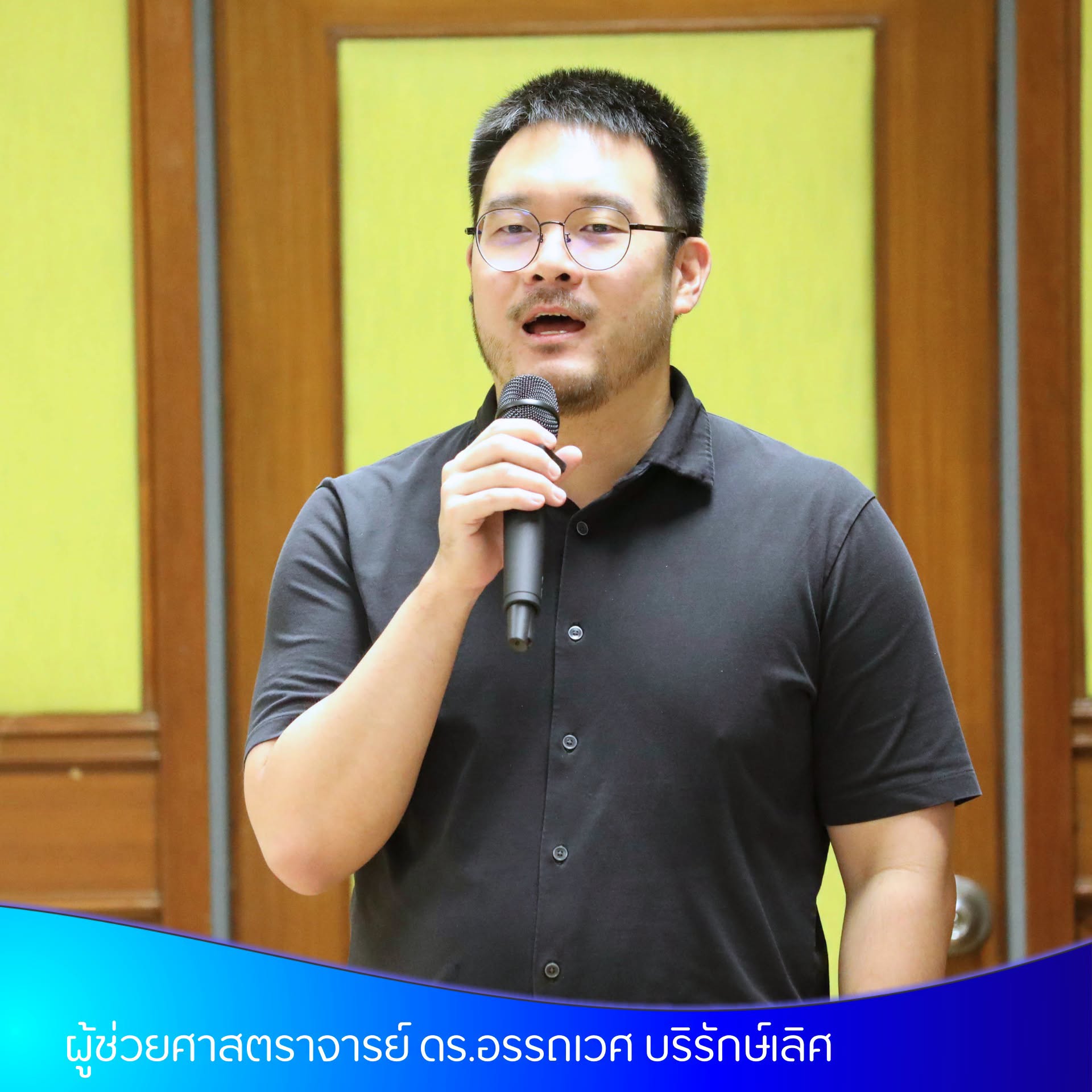
Assistant Professor Dr. Attawet Boriraklet
and Assistant Professor Dr. Ampaphan Tantinakul
This training session was honored by experts specializing in international criteria for learning outcome integration, instructional management, and assessment, who shared conceptual frameworks and various criteria to systematically analyze issues that should be improved in teaching and learning. They also provided guidelines for self-assessment and writing a self-assessment report in alignment with the AUN-QA criteria.
The main goal of the training
Systematically self-assess
Analyze the strengths and areas for improvement at the curriculum level in a concrete manner.
Write an SAR in alignment with AUN-QA
Prepare information, evidence, and compile the self-assessment report to meet the criteria.
Aligning CLOs • PLOs • Teaching • Assessment
Align learning outcomes, teaching and learning activities, and assessment methods according to the constructive alignment approach.
Elevate curriculum quality in the same direction
Curriculum quality development does not end with writing an evaluation report, but must connect everything from the curriculum goals, learning outcomes, and instructional management to evaluation, so that data can be continuously used to improve student learning and create tangible educational quality.
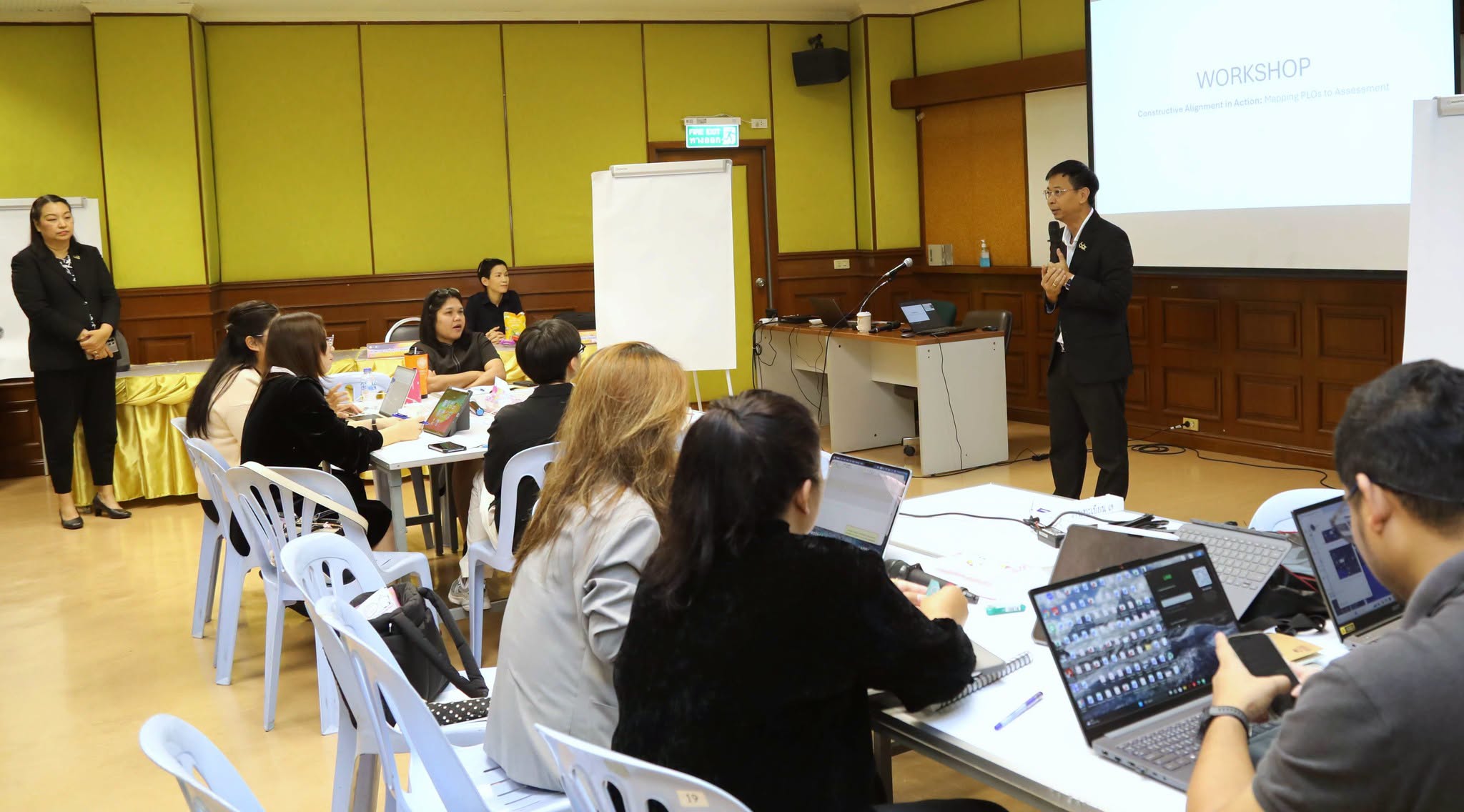
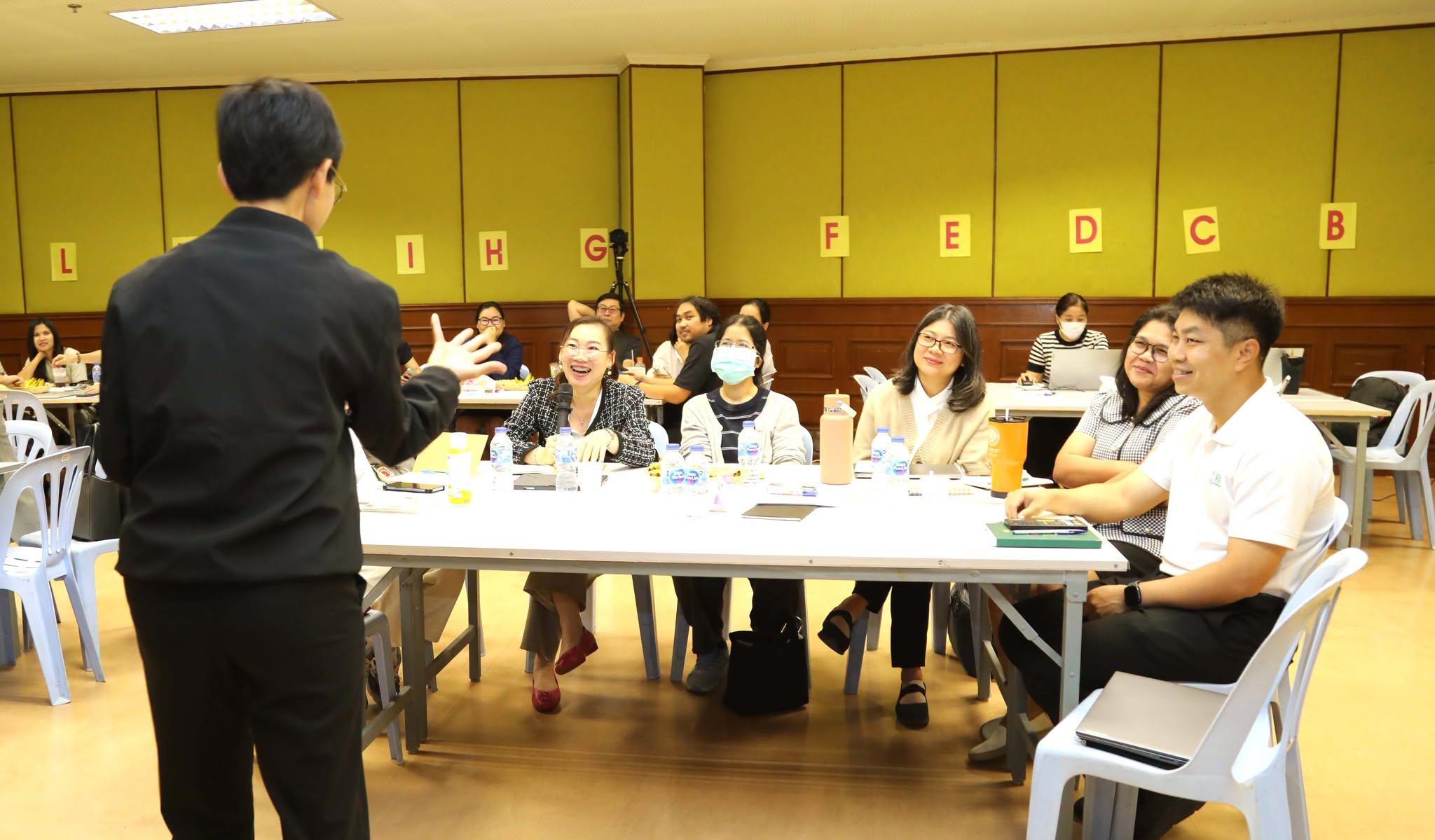
Atmosphere of the training session
Click on the image to view a larger version, or view more photos from the Facebook page of the Faculty of Agricultural Technology, KMITL.